
A Comprehensive Career Guide Between Sonography Or Nursing

Choosing a career in healthcare is a noble and rewarding decision, but with so many pathways available, it can be challenging to determine which one aligns best with your skills, interests, and lifestyle. Two of the most in-demand and fulfilling roles are Diagnostic Medical Sonography and Nursing. This guide provides a clear, professional comparison to help you make an informed decision for your future.

Understanding the Core Roles
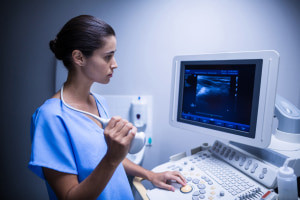
What is a Sonographer (Ultrasound Technologist)?
A Diagnostic Medical Sonographer is a specialized allied health professional who operates ultrasonic imaging equipment to produce diagnostic images, scans, videos, or 3D volumes of patient anatomy. They often specialize in areas like:
Obstetric/Gynecologic: Imaging of the female reproductive system and fetus.
Abdominal: Imaging of organs like the liver, kidneys, and pancreas.
Cardiac (Echocardiography): Imaging of the heart and its structures.
Vascular: Imaging of blood vessels and circulatory systems.
Key Focus: Operating high-tech equipment, producing precise diagnostic images, and collaborating with radiologists or physicians to interpret findings. Patient interaction is typically focused, brief, and procedure-specific.
What is a Nurse?
A Nurse is a healthcare professional responsible for the holistic care of patients across a wide spectrum of settings. They assess patient health, administer treatments and medications, monitor conditions, provide emotional support, and educate patients and families. Specializations are vast and include:
Critical Care
Pediatrics
Oncology
Family Practice
Surgery (OR Nurse)
Key Focus: Direct, continuous patient care, critical thinking in dynamic situations, care coordination, and patient advocacy. The role is deeply interpersonal and spans the entire patient journey.
Head-to-Head Comparison: Key Factors
Factor | Sonography | Nursing |
Primary Focus | Diagnostic Imaging. Capturing detailed anatomical data for diagnosis. | Direct Patient Care. Managing overall patient treatment, recovery, and wellness. |
Patient Interaction | Shorter-term, procedural. Focused on performing a specific scan. Often see the same patient only a few times. | Long-term, holistic. Involves ongoing communication, emotional support, and education over shifts or an entire care episode. |
Work Environment | Hospitals, outpatient imaging centers, physician offices, clinics. Often in dimly lit, quiet scan rooms. | Hospitals, clinics, schools, homes, public health, corporations. Environments are fast-paced and can be high-stress. |
Physical Demands | Repetitive motion strain (transducer manipulation), potential for musculoskeletal injury from positioning patients and equipment. | High physical demand: prolonged standing, lifting/turning patients, constant walking. High risk of burnout and emotional fatigue. |
Typical Education | 2-4 years. Most common path is a 2-year Associate Degree in Sonography. Bachelor's degrees are also available. | 2-4+ years. Entry via Associate Degree in Nursing (ADN), Bachelor of Science in Nursing (BSN), or accelerated programs. BSN is increasingly preferred. |
Licensure/Certification | Certification required by most employers. Not typically state-licensed (varies). Credentials from ARDMS or CCI are standard. | State licensure mandatory. Must pass the NCLEX-RN exam. Certifications (e.g., CCRN, OCN) are available for specialties. |
Career Advancement | Lead Sonographer, Department Manager, Application Specialist, Education/Instructor, Sales. | Charge Nurse, Nurse Manager, Nurse Practitioner (with grad school), Nurse Educator, Clinical Nurse Specialist. |
Job Outlook & Salary | Outlook: Excellent. BLS projects 10% growth (2022-2032), much faster than average. Median Salary (2023): ~$84,470 (Source: BLS) | Outlook: Excellent. BLS projects 6% growth (2022-2032). Median Salary (2023): ~$86,070 (Source: BLS) Note: Varies widely by specialty, location, and shift. |
How to Choose: Key Questions to Ask Yourself
Do you prefer technology or direct care? Sonographers are technology-driven diagnosticians; nurses are hands-on caregivers.
What type of patient relationship do you want? Do you prefer meaningful but brief interactions (Sonography) or deep, ongoing relationships (Nursing)?
How do you handle stress? Nursing often involves managing multiple patients, emergencies, and high-stakes decisions. Sonography stress is more focused on diagnostic accuracy, technical challenges, and patient flow.
What are your educational goals? Both require significant education, but nursing offers a clearer, more varied pathway for advanced practice degrees (NP, CRNA) leading to greater autonomy and pay.
What is your lifestyle preference? Nursing offers incredible shift flexibility (days, nights, 3x12s) and travel opportunities. Sonography roles are more commonly weekday, daytime hours in outpatient settings.
Additional Information & Essential References
Accreditation is Crucial: For sonography, ensure your program is accredited by CAAHEP. For nursing, look for accreditation from CCNE or ACEN. This is vital for eligibility for certification/licensure exams.
Shadowing is Invaluable: Spend a day with a sonographer and a nurse. This firsthand experience is the best way to feel the difference in daily routines.
Consider Hybrid Roles: Explore careers like Nurse-Midwife (using sonography) or Cardiovascular Nurse working closely with echo sonographers to see how fields intersect.
Long-Term Trajectory: Nursing provides a more defined and funded ladder for clinical advancement into advanced practice roles. Sonography advancement often leads toward management, education, or industry.
Key Resources for Research:
Society of Diagnostic Medical Sonography (SDMS): www.sdms.org
American Nurses Association (ANA): www.nursingworld.org
American Registry for Diagnostic Medical Sonography (ARDMS): www.ardms.org
Bureau of Labor Statistics (BLS) Occupational Outlook Handbook: For the most current salary and growth data.
The Bottom Line
Both sonography and nursing are stable, respected, and deeply rewarding careers where you make a tangible difference in patients' lives every day.
Choose Sonography if: You are detail-oriented, fascinated by anatomy and technology, prefer a focused diagnostic role, and want a career with strong technical specialization.
Choose Nursing if: You thrive on human connection, want to manage diverse and dynamic patient care situations, desire a career with almost limitless specialization paths, and seek the potential for advanced clinical autonomy.
Your decision should align with your personal strengths, desired daily activities, and long-term professional vision. There is no wrong choice, only the right choice for you. Invest time in research, speak to professionals, and choose the path that will make you look forward to work each day.


Comments